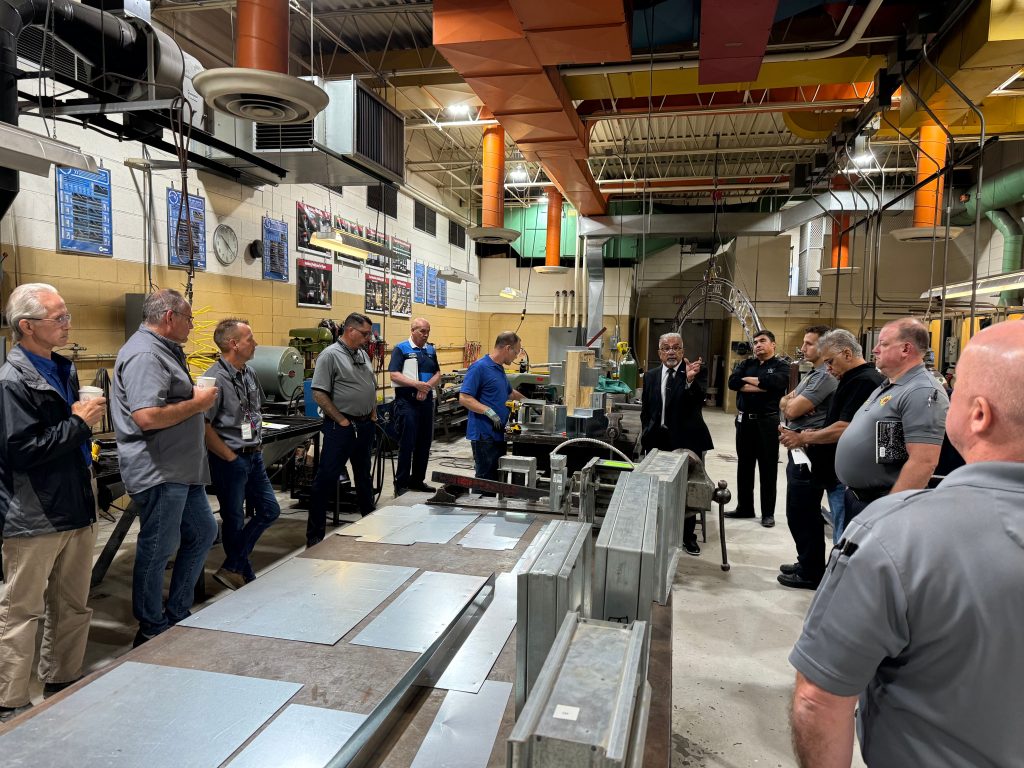
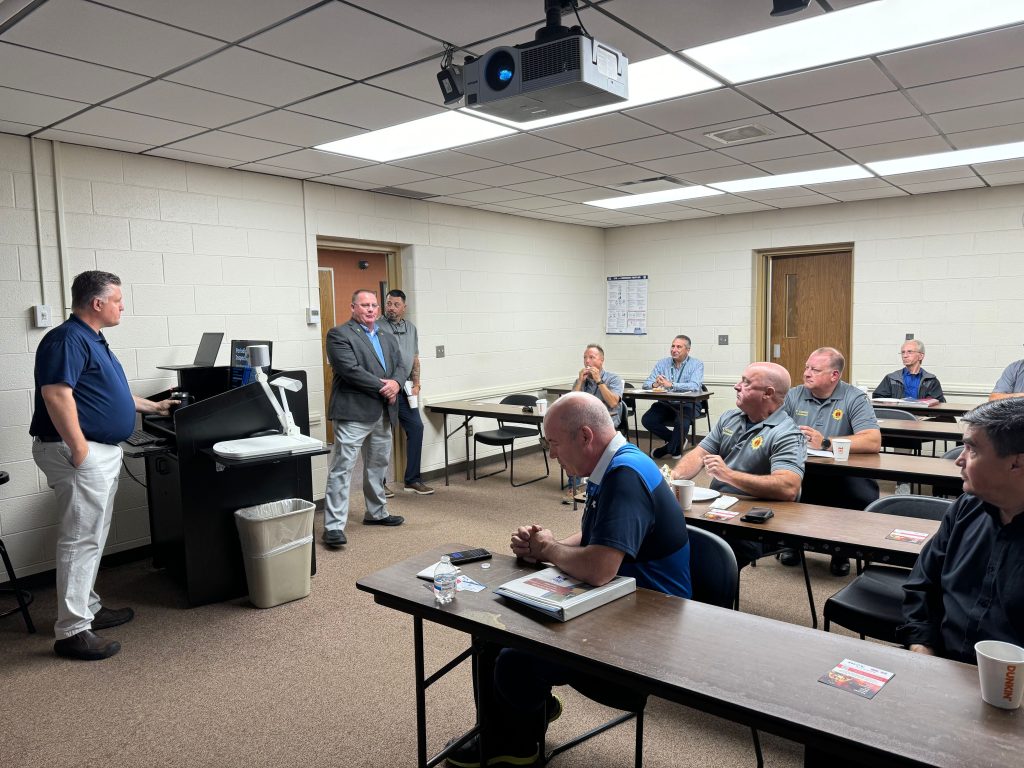
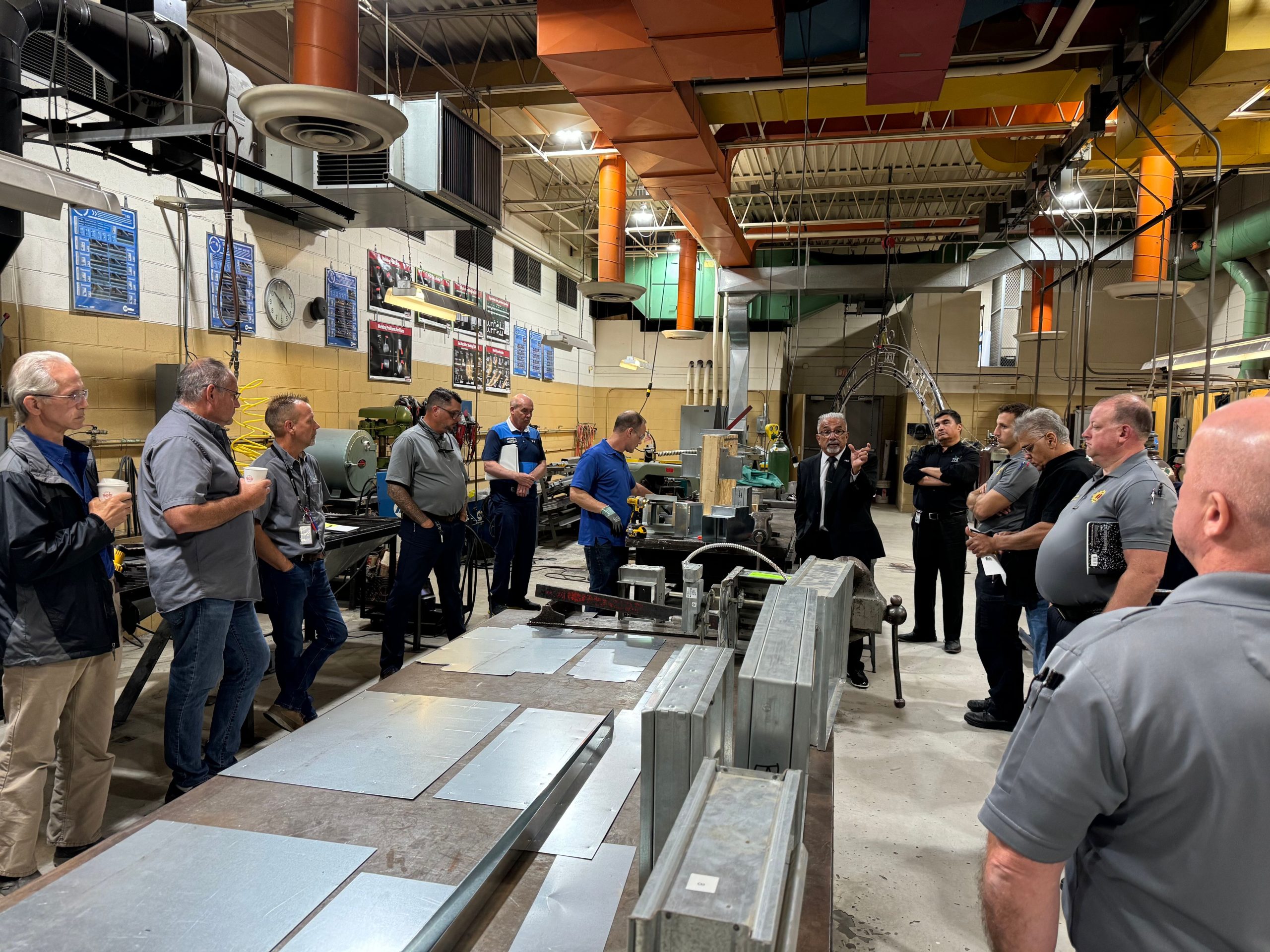
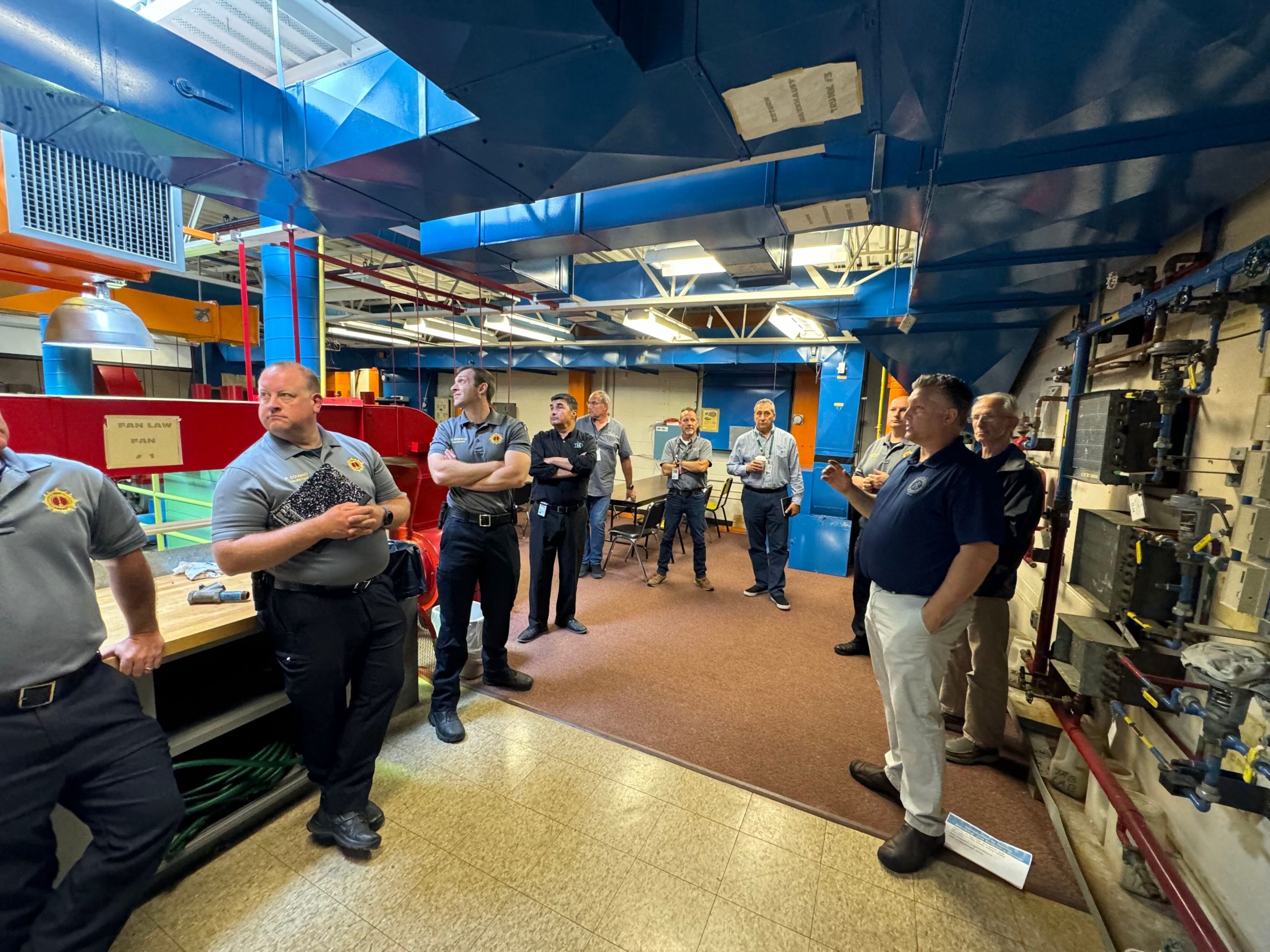
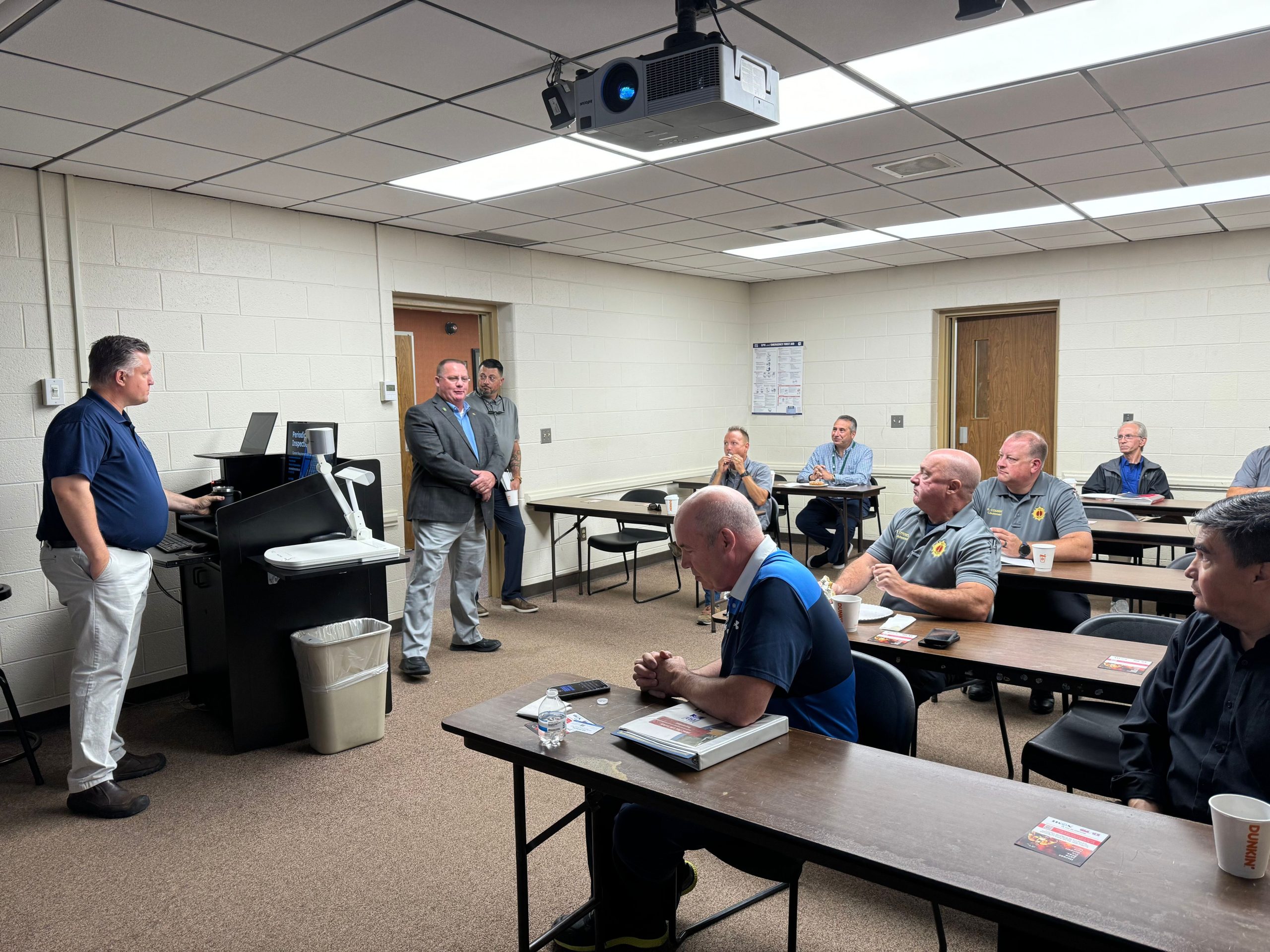
On July 9, SMART Local 80 in Detroit hosted a lunch-and-learn for more than a dozen building and fire inspectors from the City of Troy, Michigan. This outreach event at the training center consisted of a 45-minute presentation on relevant codes and standards followed by two hands-on demonstrations and tours of the newly outfitted welding lab and the ICB-certified TAB lab. Vince Alvarado, NEMI director of implementation, and Joe Pickens, NEMI field representative, were on hand to work with Local 80 and answer questions.
The throughline for the day was how SMART training centers develop skilled, trained, certified technicians to support the installation, testing, inspection and maintenance of dampers and fire life safety systems. Participants learned about the value of NEMI’s certification process and NEMI’s involvement in codes and standards development, and organizers were able to highlight an active fire life safety contractor who does work in their area.
Regarding the locally adopted International Building Code/International Fire Code (IBC/IFC) Codes and National Fire Protection Association (NFPA) Standards, Pickens said, “It was clear we all spoke the same language. We highlighted our ANAB (ANSI National Accreditation Board) accreditation — they are very familiar with that, but better understood its value as a result of our meeting.”
Issues with smoke control systems are a major concern among building inspectors, and this event arose after NEMI attended an International Code Council (ICC) meeting last year. It was there that Tom Caporuscio, deputy building official for the City of Troy, saw a presentation by Alvarado and reached out to see about getting a similar presentation done for his inspectors. NEMI then coordinated with Local 80 Business Manager Tim Mulligan and Training Coordinator Matt O’Rourke, and a lunch-and-learn seemed the perfect fit.
The first hands-on demonstration was an installation mock-up, where an instructor showed how technicians are trained to fabricate sleeves for various fire and smoke dampers. If technicians haven’t been trained properly on this part of field installation, Pickens noted, it can cause major issues with the functionality of the damper.
“Many of them had concerns about this because they’d seen so many dampers installed with fire stopping within the annular space — in other words, an installation that violates the Code,” Pickens said. “Techs who aren’t trained will instinctually do this wrong.”
The second training station was managed by an ICB-certified Fire and Smoke Damper Technician employed by local contractor Dee Cramer, who reviewed the inspection, testing and maintenance procedures. Participants were able to see the training center’s fire life safety mock-up in action, with its various fire, smoke and combination dampers. These procedures were similar to what fire inspectors themselves do, but often a third party is hired to perform these tasks. That’s where certified technicians come in.
Too often, inspectors find that an untrained technician will state they’ve done the work when they haven’t. Showing how skilled, trained, certified technicians have been trained specifically to do this task reassures city inspectors — and can demonstrate the need for such a workforce to perform the duty of ensuring buildings are safe for occupants.
The event was planned for two hours, but went about 30 minutes over due to the interest and engagement from the inspectors. The City of Troy has expressed interest in making this an annual event, and inviting the city council to attend the next one.
“It could not have gone better,” Pickens said. “Everyone was pleased with it.”